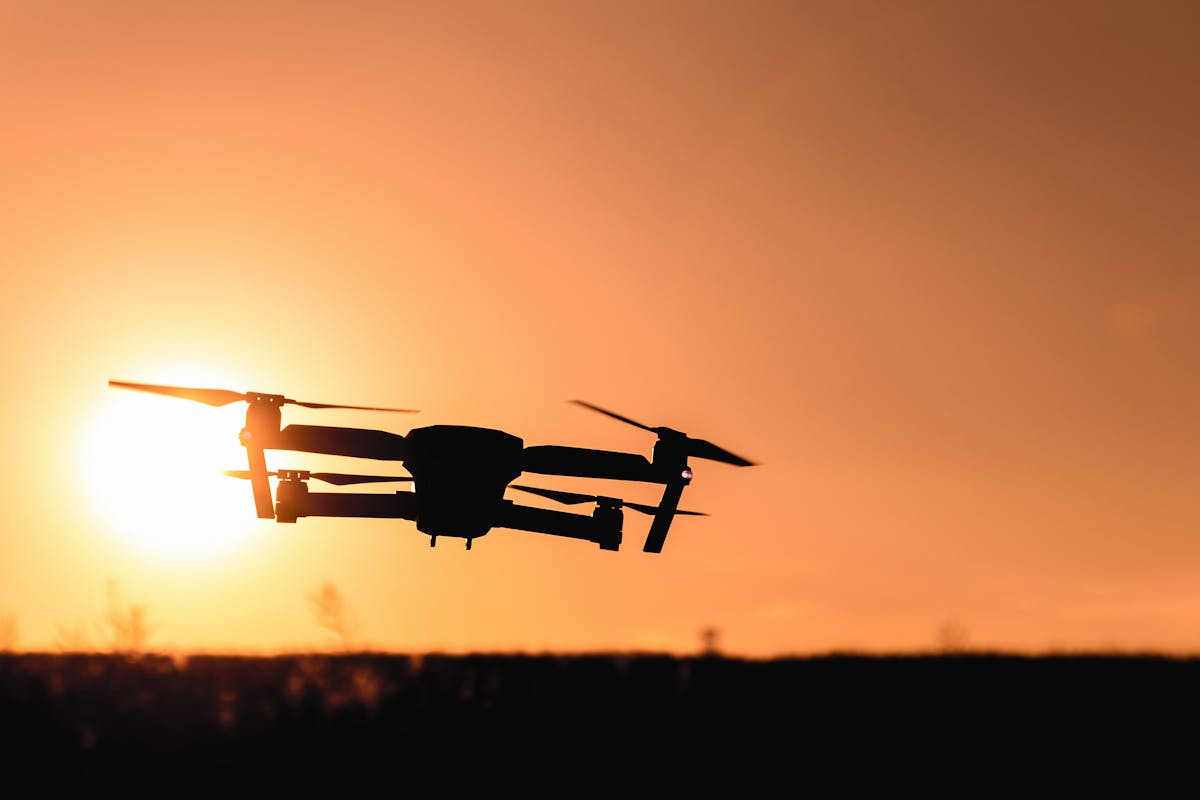
The Drone Survey Revolution
Property surveying has remained largely unchanged for decades, relying on ladders, scaffolding, and cherry pickers to access roofs and high elevations. This traditional approach is time-consuming, expensive, and carries significant health and safety risks. Surveyors working at height face injury risks, and many roof areas remain completely inaccessible.
Drone technology has revolutionized this process. In 2026, drone surveys are mainstream in the property industry, offering safer, faster, and more comprehensive inspections at a fraction of traditional costs.
📊 Drone Survey Adoption
2021: 12% of property surveys used drone technology
2026: 68% of commercial and 45% of residential surveys now include drone inspections
Cost reduction: 60-70% savings compared to scaffolding/cherry picker access
Safety record: Zero surveyor injuries from working at height with drone inspections
Emily, purchasing a Victorian terraced house in Hackney, needed a roof inspection. Traditional scaffold access would have cost £1,800 and taken three days to erect and remove. Her surveyor used a drone instead, completing a comprehensive roof survey in 45 minutes for £350. The high-resolution imagery revealed several loose tiles, moss growth, and early signs of valley gutter deterioration that would have been difficult to photograph safely from ladders.
Why Drones Are Transforming Property Surveys
- Safety first: Eliminates surveyor risk from working at height – no ladders, scaffolding, or cherry pickers
- Access anywhere: Inspect dangerous, steep, or completely inaccessible roofs and facades
- Superior detail: Ultra-high-resolution cameras capture detail impossible to see from ground level
- Speed and efficiency: Complete roof surveys in 30-60 minutes vs hours or days for traditional access
- Cost-effective: 60-70% cheaper than scaffolding or cherry picker hire
- Thermal imaging: Advanced drones with thermal cameras identify hidden defects like insulation gaps and moisture
- Comprehensive documentation: Hundreds of high-resolution images and 4K video provide detailed evidence
How Drone Property Surveys Work
Professional drone property surveys follow a structured process combining advanced technology with RICS surveying expertise:

Step 1: Pre-Survey Planning
The surveyor reviews property details, assesses airspace restrictions (London has numerous flight restriction zones around airports), checks weather conditions (wind speed, visibility, precipitation), and plans flight paths for comprehensive coverage.
In London, surveyors must comply with CAA (Civil Aviation Authority) regulations including maintaining visual line of sight, respecting privacy and data protection, operating within legal altitude limits (typically 120m maximum), and avoiding controlled airspace without authorization.
Step 2: On-Site Drone Flight
CAA-licensed drone pilots deploy professional survey drones equipped with 4K or higher resolution cameras (20-48 megapixels), gimbal-stabilized imaging for sharp, clear footage, thermal imaging capability (for heat loss and moisture detection), and GPS positioning for accurate location tagging.
The drone systematically photographs all roof slopes, ridges, valleys, chimneys, parapets, facades and elevations, gutters and downpipes, dormer windows, skylights, and any defects or damage visible from aerial perspective.
Step 3: Image Analysis and Reporting
The surveyor reviews hundreds of high-resolution images and thermal imagery to identify defects including roof covering damage (missing/slipped tiles, cracked slates), gutter defects and blockages, chimney deterioration, flashing failures, structural movement or sagging, water damage and staining, insulation deficiencies (thermal imaging), and vegetation growth (moss, plants).
All findings are documented in a comprehensive report with annotated photographs, detailed descriptions of defects, condition ratings and severity assessments, repair recommendations, and cost estimates.
Step 4: Follow-Up and Recommendations
The surveyor discusses findings with you and recommends any further specialist investigations if required. The drone imagery becomes part of your permanent property record, valuable for future maintenance planning and comparison surveys.
⏱️ Timeline
Drone flight duration: 30-60 minutes typical
Image processing: 1-2 days
Report delivery: 3-5 working days
Total process: 1 week vs 2-3 weeks for scaffolding-based inspections
Benefits of Drone Surveys Over Traditional Methods
Drone surveys offer compelling advantages compared to traditional ladder, scaffolding, or cherry picker access:
1. Unparalleled Safety
Working at height accounts for 40% of workplace fatalities in construction and surveying. Drone surveys completely eliminate surveyor risk from falls, ladder accidents, and scaffold failures. The surveyor operates safely from ground level with full control.
2. Access to Impossible Areas
Many property areas are completely inaccessible to traditional methods including steep or fragile roofs (risk of collapse), roofs adjacent to fragile conservatories or extensions, tall buildings where scaffolding is prohibitively expensive, properties with no safe access points, listed buildings where scaffolding would damage fabric.
Drones effortlessly access all these areas, revealing defects that would otherwise remain hidden.
3. Superior Image Quality and Detail
Modern survey drones capture 48-megapixel images with exceptional detail. Surveyors can zoom into specific areas during analysis, identifying cracks, damage, or deterioration invisible to ground-level observation.
4K video provides dynamic walkthrough footage, helping clients understand findings and see defects in context. Time-stamped and GPS-tagged imagery provides indisputable evidence for insurance claims or legal disputes.
4. Thermal Imaging Capability
Advanced survey drones equipped with thermal cameras reveal hidden defects including insulation gaps and thermal bridging, moisture intrusion and water damage, heat loss areas increasing energy costs, and HVAC system inefficiencies.
Thermal surveys identify problems before they cause visible damage, enabling proactive maintenance and repair.
5. Speed and Minimal Disruption
Traditional scaffold erection takes 1-3 days and causes significant disruption. Cherry pickers require road closures and parking suspensions. Drone surveys are completed in 30-60 minutes with minimal disruption, no access equipment blocking driveways or roads, no scaffolding covering windows for weeks, and property remains fully accessible throughout.
6. Cost Efficiency
Scaffolding costs for typical London properties range from £800-£2,500+ for roof access. Cherry picker hire costs £300-£800 per day plus operator fees. Traffic management for cherry pickers adds £400-£800+. Drone surveys cost just £250-£600 for comprehensive roof inspections – savings of 60-70%.
7. Comprehensive Documentation
Drone surveys produce extensive visual documentation valuable for immediate defect assessment, future condition monitoring (compare surveys over time), insurance documentation and claims, contractor briefing for repairs, and property sale documentation.
Michael, selling his six-story Victorian conversion in Islington, commissioned a drone survey revealing his roof condition was excellent. The comprehensive imagery and professional report reassured buyers and eliminated survey concerns, helping him achieve his asking price of £1.85 million.
What Drone Surveys Can Inspect
Drone surveys excel at inspecting elevated and inaccessible building elements:
Roofs (Primary Use)
- Roof coverings: Tiles, slates, felt, lead, copper – condition, damage, missing elements
- Ridges and hips: Ridge tiles, bedding mortar, weatherproofing
- Valleys and gutters: Valley linings, gutter condition, blockages, debris
- Flashings: Chimney flashings, wall abutment flashings, dormer flashings
- Parapets and copings: Condition, stability, weatherproofing
- Chimneys: Structural condition, flaunching, pots, leaning or movement
- Flat roofs: Felt condition, ponding, blistering, splitting
- Dormer windows: Condition, weatherproofing, flashings
- Skylights and roof lights: Seals, glazing, flashings
Facades and Elevations
- Wall condition: Cracking, spalling, render defects
- Brickwork and stonework: Mortar condition, structural movement
- Windows (high-level): Frame condition, glazing, seals
- Architectural details: Decorative stonework, cornices, balustrades
- Rainwater goods: High-level gutters, downpipes, hoppers
Commercial and Industrial
- Large commercial roofs: Membrane condition, seams, penetrations
- Solar panel installations: Panel condition, mounting integrity
- HVAC equipment: Roof-mounted units, ducting, condition
- Warehouse facilities: Portal frame structures, cladding, gutters
- High-rise buildings: Facade condition, cladding, safety systems
Thermal Imaging Applications
- Insulation assessment: Identify missing or inadequate insulation
- Moisture detection: Locate water ingress and damp areas
- Heat loss mapping: Identify thermal bridging and energy inefficiency
- Flat roof condition: Detect trapped moisture in flat roof systems
- HVAC efficiency: Assess heating/cooling system performance
Advanced Drone Survey Technology
Professional property survey drones are sophisticated aerial platforms equipped with advanced imaging technology:
Survey-Grade Drone Specifications
Camera systems: 48-megapixel sensors, 4K or 6K video recording, mechanical shutters (eliminate motion blur), adjustable aperture for varying light conditions, and RAW image capture for maximum detail.
Thermal imaging: FLIR thermal cameras (640x512 or higher resolution), temperature measurement accuracy to ±2°C, multiple color palettes for analysis, and simultaneous visual and thermal capture.
Flight systems: GPS and GLONASS positioning (centimeter accuracy), obstacle avoidance sensors (collision prevention), automatic flight planning and waypoints, and wind resistance up to 35 mph.
Image Processing and Analysis Software
Professional surveyors use specialized software for photogrammetry (3D model creation from images), orthomosaic generation (geo-referenced aerial maps), thermal analysis and temperature mapping, defect annotation and markup, and measurement tools (measure distances, areas, slopes).
CAA Certification and Legal Compliance
Professional drone surveyors must hold CAA Operational Authorization, A2 CofC (Certificate of Competency) for flying near people, full public liability insurance (£5-10 million cover), and GDPR compliance for data protection.
🚁 Our Drone Survey Equipment
Angel Surveyors operates the latest DJI Mavic 3 Enterprise series with 48MP Hasselblad cameras and thermal imaging capability. Our CAA-licensed pilots have conducted over 1,200 property surveys across London, combining cutting-edge technology with RICS surveying expertise.
Drone Survey Costs in London 2026
Drone survey pricing depends on property type, size, complexity, and required imagery (visual only or thermal):
Residential Properties
- Small terraced house or flat (basic roof survey): £250-£400
- Medium house (semi-detached, standard terrace): £350-£550
- Large house (detached, complex roof): £450-£700
- Very large or complex properties: £700-£1,200
Commercial Properties
- Small commercial building (up to 5,000 sq ft): £400-£800
- Medium commercial (5,000-15,000 sq ft): £700-£1,500
- Large commercial or industrial (15,000+ sq ft): £1,200-£3,000+
Thermal Imaging Surveys (Add-On)
- Residential thermal survey: Add £200-£400
- Commercial thermal survey: Add £400-£1,000
Cost Comparison: Drone vs Traditional Access
Scaffolding for typical London terraced house:
- Erection and removal: £1,200-£2,500
- 2-3 weeks hire period: Additional £300-£600
- Survey time: 2-4 hours
- Total: £1,500-£3,100
Drone survey for same property:
- Drone flight and survey: £350-£550
- Survey time: 45 minutes
- Savings: £1,000-£2,500 (65-80% cheaper)
When to Use Drone Surveys
Drone surveys are ideal in specific situations where they provide maximum value and advantage over traditional methods:
Essential for Drone Surveys
- Steep or fragile roofs: Slate roofs, old tiles, or structures unsafe for surveyor access
- Tall buildings: Properties where scaffolding costs are prohibitive
- No safe access: Properties lacking suitable ladder positions or access points
- Listed buildings: Where scaffolding could damage historic fabric
- Time-critical surveys: When reports are needed urgently (within 1 week)
- Large commercial roofs: Warehouses, factories, retail parks where traditional inspection is impractical
- Pre-purchase surveys: Buyers wanting comprehensive roof assessment without property owner arranging scaffolding
Highly Beneficial
- Solar panel assessment: Inspecting existing or proposed solar installations
- Insurance claims: Documenting storm damage, fallen trees, or other roof damage
- Pre-sale documentation: Sellers demonstrating good roof condition to potential buyers
- Maintenance planning: Periodic condition monitoring for large property portfolios
- Thermal surveys: Energy efficiency assessments and heat loss identification
Standard Building Surveys
Many surveyors now include drone roof inspections as standard in comprehensive Building Surveys, providing far superior documentation compared to traditional binocular observation from ground level.
Rachel, purchasing a Victorian house in Greenwich, commissioned a Level 3 Building Survey. The surveyor included drone roof inspection revealing significant roof issues: missing ridge tiles on rear slope (not visible from street), valley gutter deterioration requiring replacement, chimney leaning 15cm out of plumb, moss growth indicating poor drainage.
Total repair costs: £18,500. Rachel negotiated a £20,000 price reduction. Without drone inspection, these defects would have remained hidden until after purchase.
Drone Survey Limitations and Considerations
While transformative, drone surveys have limitations and aren't suitable for every situation:
What Drones Cannot Do
- Physical testing: Cannot lift tiles, test materials, or conduct destructive investigations
- Internal roof spaces: Cannot inspect roof structure, timbers, or insulation from inside
- Detailed close-up inspection: Some fine detail still requires physical access
- Under-surface defects: Cannot identify defects hidden beneath sound-looking surfaces
- Interior surveys: Drones are external-only; internal spaces require traditional inspection
Complementary, Not Replacement
Drone surveys complement but don't completely replace traditional inspection methods. Comprehensive Building Surveys should combine drone aerial inspection with traditional internal inspection, roof space access (loft inspection), testing and investigation where accessible.
Weather Dependency
Drone flights require suitable weather conditions including wind speeds below 25 mph (typically), no heavy rain or snow, reasonable visibility (not thick fog), and adequate daylight or lighting.
London's weather can delay drone surveys by 1-3 days waiting for suitable flying conditions.
Airspace Restrictions
London has extensive controlled airspace around airports (Heathrow, City, Gatwick) requiring CAA authorization. Some central London areas have flight restrictions. Surveyors must obtain permissions, which can add 3-5 days to timescales in restricted zones.
⚠️ Choosing Qualified Drone Surveyors
Only use CAA-licensed drone operators with full insurance and RICS surveying qualifications. Unlicensed "hobbyist" drone operators lack legal authorization, insurance, and professional surveying expertise. Always verify CAA Operational Authorization and A2 CofC certification.
Key Drone Survey Takeaways
- ✓ Drone surveys have revolutionized property inspections, used in 68% of commercial and 45% of residential surveys
- ✓ Eliminate surveyor working at height risks – zero injuries with drone inspection methods
- ✓ Access impossible areas: steep roofs, tall buildings, fragile structures, properties with no safe access
- ✓ 60-70% cost savings compared to scaffolding (£350-£550 vs £1,500-£3,100 for typical residential)
- ✓ Ultra-high-resolution 48MP imagery reveals defects invisible from ground level
- ✓ Thermal imaging identifies hidden insulation gaps, moisture intrusion, and heat loss
- ✓ Fast surveys: 30-60 minutes vs 1-3 weeks for scaffolding-based inspections
- ✓ Comprehensive documentation: hundreds of images and 4K video for detailed analysis
- ✓ Limitations: cannot physically test materials or inspect internal roof spaces
- ✓ Use CAA-licensed operators with RICS surveying qualifications and full insurance
Frequently Asked Questions
Q: Are drone surveys as accurate as traditional scaffolding inspections?
A: For visual inspection, drone surveys are often MORE accurate due to superior image resolution (48MP) and ability to photograph every area from multiple angles. However, they cannot physically test materials or conduct destructive investigations. Best practice combines drone aerial survey with traditional internal inspection where accessible.
Q: Do I need the property owner's permission for a drone survey?
A: If surveying for a property you're purchasing, the owner should grant access permission (standard in survey clauses). Drones can photograph from public airspace without entering private property, but professional practice requires owner notification and cooperation. For survey clients, we handle all permission arrangements.
Q: What if weather prevents drone flying on survey day?
A: We monitor weather forecasts and reschedule if conditions are unsuitable (high winds, heavy rain). In London, weather delays are typically 1-3 days. We prioritize your survey and typically complete within the same week. Some internal surveys can proceed regardless of weather, with drone inspection scheduled separately.
Q: Can drones detect roof leaks or water damage?
A: Drones can identify visible signs of water damage (staining, deterioration) and thermal imaging reveals moisture intrusion invisible to standard cameras. However, active leaks are best identified through internal roof space inspection. Comprehensive surveys combine both approaches for complete assessment.
Q: How close can drones get to chimneys and difficult areas?
A: Professional survey drones can safely approach within 1-2 meters of chimneys, parapet walls, and architectural details while maintaining safe clearance. High-resolution cameras allow extreme digital zoom during analysis, revealing crack widths, mortar condition, and fine deterioration detail.
Q: Are drone surveys accepted by mortgage lenders and insurance companies?
A: Yes, when conducted by RICS qualified surveyors using professional equipment. Drone surveys are now industry-standard and widely accepted by lenders, insurers, and legal professionals. Many lenders actively prefer drone surveys due to superior documentation and safety benefits.
Q: Can I see the drone footage and keep copies?
A: Yes, comprehensive survey reports include extensive annotated photographs. Many surveyors provide full image sets (typically 100-300 images) and video footage as digital files. This documentation becomes your permanent property record, valuable for insurance, future surveys, and contractor briefings.
Book Your Professional Drone Survey
Get comprehensive roof and facade inspection with our CAA-licensed drone survey service.
Request Drone Survey QuoteCAA licensed operators • 48MP imaging • Thermal capability • Fast reports